Boost Business with SAN Storage & Backup
In today’s fast-paced digital era, businesses are constantly managing and processing massive volumes of data daily. Efficient data storage and robust security are essential to keep operations running smoothly and prevent costly downtime. Storage Area Network (SAN) storage is a high-performance solution designed to help enterprises manage, store, and protect their data effectively. At IR Systems, we provide cutting-edge storage solutions customized to meet your business’s unique requirements. Our advanced technology ensures your data is secure, accessible, and optimized for peak performance, helping you stay ahead in a competitive landscape. Trust us to deliver reliable, scalable storage solutions that empower your business to thrive. What is a Storage Area Network (SAN), and Why Should It Be Used? Storage Area Network (SAN) storage is a high-speed, dedicated network that provides access to consolidated block-level storage. Unlike traditional storage methods, SAN enhances data availability, reliability, and performance for businesses. Key benefits include: High-Speed Performance – Ensures quick data access and reduces latency. Scalability – Allows businesses to expand storage capacity as needed. Data Redundancy – Offers failover protection and disaster recovery. Enhanced Security – Ensures restricted access and data protection. Improved Efficiency – Reduces bottlenecks and enhances overall system performance. With these features, SAN storage is the preferred choice for businesses looking to optimize their IT infrastructure and enhance data security. The Essential Guide to Enterprise Data Security and Continuous Business Growth Data security is at the core of modern business operations. Without secure data storage, organizations risk data breaches, compliance issues, and financial losses. SAN storage plays a vital role in enterprise security by: Providing Data Encryption – Protects sensitive information from unauthorized access. Offering Redundancy & Backups – Prevents data loss through replication and failover mechanisms. Enabling Quick Data Recovery – Minimizes downtime in case of failures. Supporting Secure Remote Access – Ensures authorized personnel can access critical data from anywhere. Enhancing Disaster Recovery Strategies – Provides seamless recovery options for business continuity. By implementing a reliable backup solution, businesses can safeguard their operations and ensure continuous growth without disruptions. Backup Solutions: Ensuring Data Protection and Business Continuity A well-structured backup solution is critical for businesses relying on data-driven operations. Key components of effective backup solutions include: Automated Backups – Schedule regular backups to prevent data loss. Cloud Integration – Store backup copies offsite for additional security. Disaster Recovery Plans – Ensure data retrieval in case of system failures. Scalable Storage – Adapt to business growth without compromising security. Data Replication & Mirroring – Enhance data availability and redundancy. Investing in backup solutions ensures that businesses remain resilient against cyber threats and unexpected system failures. Understanding Variations in SAN Storage Systems When choosing a Storage Area Network solution, understanding its variations is essential. Businesses can opt for: Fibre Channel (FC) SAN – High-speed, low-latency storage connectivity ideal for large enterprises. iSCSI SAN – Cost-effective and suitable for small to mid-sized businesses. NVMe-oF SAN – Ultra-fast data transfer with minimal latency for high-performance applications. Hybrid SAN Solutions – Combining multiple technologies for customized storage needs. Each variation offers specific advantages, helping businesses select a storage solution that aligns with their operational requirements and budget. Exploring Qsan Storage for Business Efficiency Qsan Storage is an industry-leading Storage Area Network solution known for: Performance Optimization – Enhancing storage speed and efficiency. Robust Security – Offering advanced data protection features. Scalability – Growing with business demands without disruption. Cost-Effectiveness – Providing enterprise-grade features at a competitive price. Intelligent Data Management – Simplifying data handling through automated tools. Businesses looking for a high-performance storage solution can rely on Qsan Storage for secure and efficient data management. Why Choose IR Systems for Your SAN Storage Needs? At IR Systems, we provide cutting-edge Storage Area Network solutions designed to meet enterprise demands. Our solutions ensure: Seamless Integration – Compatible with existing IT infrastructure. Customizable Storage Options – Tailored to business-specific requirements. Reliable Backup Solutions – Ensuring data protection and quick recovery. Expert Consultation & Support – Providing ongoing technical assistance and training. Scalable & Future-Proof Solutions – Designed to grow alongside your business. Visit IR Systems today to explore our offerings and find the perfect storage solution for your business. FAQs on SAN Storage & Backup Solutions What is the main advantage of SAN storage? SAN storage provides high-speed, scalable, and secure data storage, ensuring efficient business operations. How does SAN storage differ from NAS storage? SAN operates at the block level for fast performance, while NAS storage works at the file level for easier data sharing. Are backup solutions necessary for SAN storage? Yes, implementing backup solutions ensures data protection and quick recovery in case of system failures. What industries benefit the most from SAN storage? Industries such as finance, healthcare, IT services, and manufacturing rely on SAN storage for secure, high-speed data management. How can IR Systems help with SAN storage? At IR Systems, we offer customized Storage Area Network solutions and data recovery plans to enhance business efficiency and security. Conclusion Ensuring secure and efficient data management is essential for business growth. SAN storage offers high-speed performance, scalability, and robust security, making it a vital solution for enterprises. At IR Systems, we provide tailored backup solutions and flexible storage options to safeguard your critical data and enhance operational efficiency. Our expert team helps businesses integrate reliable storage systems that prevent data loss and downtime. Whether you need enterprise data security or seamless expansion, we have the right solution for you. Contact Us today and discover how our advanced storage solutions can support your business success!
What is the Main Difference Between NAS and SAN storage?
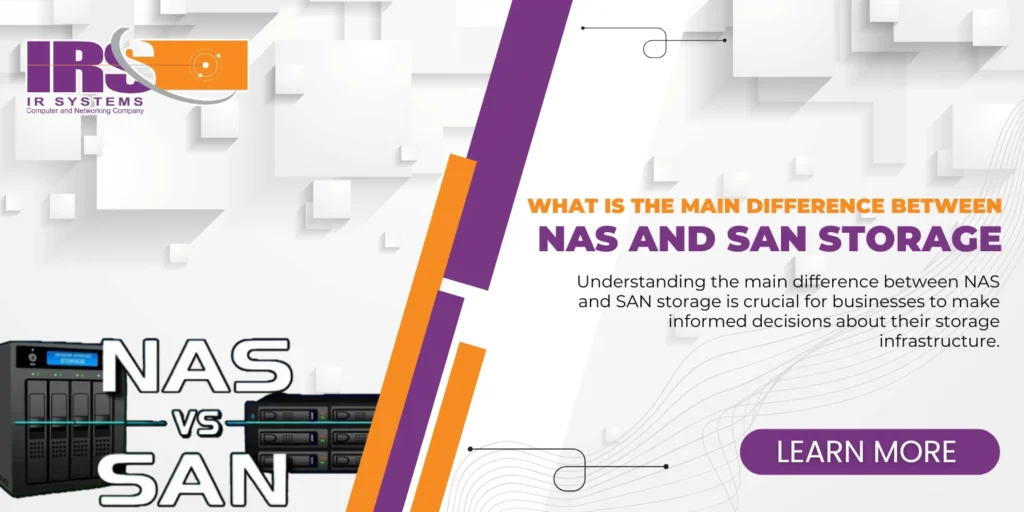
In today’s data-driven world, businesses rely heavily on efficient storage solutions to manage their ever-growing data needs. Two of the most popular storage systems are NAS (Network Attached Storage) and SAN (Storage Area Network). While both serve the purpose of data storage, they differ significantly in their architecture, functionality, and use cases. Understanding the main difference between NAS and SAN storage is crucial for businesses to make informed decisions about their storage infrastructure. In this blog, we’ll explore the key distinctions, benefits, and applications of both systems, and why choosing the right solution is essential for enterprise data security and continuous business growth. Introduction to NAS and SAN NAS and SAN are both storage solutions designed to help businesses manage and store data efficiently. However, they operate in fundamentally different ways. NAS is a file-level storage system that connects to a network, allowing multiple users and devices to access data simultaneously. It’s ideal for small to medium-sized businesses that need a simple, cost-effective solution for file sharing and backup. On the other hand, SAN is a block-level storage system that provides high-speed, dedicated access to data. It’s typically used by large enterprises that require high performance, scalability, and reliability for mission-critical applications. In this article, we’ll dive deeper into the differences between NAS and SAN storage, their advantages, and how they can benefit your business. We’ll also discuss the importance of enterprise data security and how choosing the right storage solution can contribute to continuous business growth. Whether you’re looking for backup solutions in Lahore or a robust storage system for your enterprise, this guide will help you make an informed decision. Understanding NAS: Network Attached Storage NAS (Network Attached Storage), is a storage device that connects to a network, allowing multiple users and devices to access and share files. It operates at the file level, meaning it manages data as files and folders, making it easy to use and manage. NAS devices are often used for file sharing, data backup, and media streaming. Key Features of NAS Ease of Use: NAS systems are user-friendly and require minimal setup. They are ideal for businesses that need a simple storage solution. Cost-Effective: NAS is generally more affordable than SAN, making it a popular choice for small to medium-sized businesses. Scalability: While NAS systems are scalable, they are typically limited to a certain number of drives and storage capacity. File-Level Storage: NAS manages data as files, making it easy to organize and access data. Use Cases for NAS File Sharing: NAS allows multiple users to access and share files simultaneously, making it ideal for collaborative environments. Data Backup: NAS systems are commonly used for backup solutions in Lahore and other regions, providing a reliable way to store and protect data. Media Streaming: NAS devices can stream media files to multiple devices, making them popular for home entertainment systems. Understanding SAN: Storage Area Network SAN (Storage Area Network), is a high-performance storage system that provides block-level access to data. Unlike NAS, which operates at the file level, SAN manages data as blocks, offering faster and more efficient data access. SAN storage systems are typically used by large enterprises that require high-speed, reliable storage for mission-critical applications. Key Features of SAN High Performance: SAN systems offer high-speed data access, making them ideal for applications that require low latency and high throughput. Scalability: SAN is highly scalable, allowing businesses to add storage capacity as needed without disrupting operations. Block-Level Storage: SAN manages data as blocks, providing faster and more efficient data access compared to file-level storage. Dedicated Network: SAN operates on a dedicated network, ensuring high performance and reliability. Use Cases for SAN Databases: SAN is commonly used for database storage, where high-speed data access is critical. Virtualization: SAN systems are ideal for virtualized environments, providing the performance and scalability needed for virtual machines. Enterprise Applications: Large enterprises use SAN for mission-critical applications that require high performance and reliability. Key Differences Between NAS and SAN Network-attached storage (NAS) and Storage Area Networks (SAN) are two popular storage solutions, each catering to different business needs. NAS provides easy-to-manage, file-based storage, making it ideal for small to medium-sized businesses. SAN, on the other hand, offers high-performance, block-level storage, commonly used in enterprise environments. Understanding their differences can help businesses choose the right storage solution based on performance, scalability, and cost considerations. Data Access Level NAS operates at the file level, managing data as files and folders. SAN operates at the block level, offering faster access to data. Performance NAS is suitable for general-purpose storage and file sharing but may have performance limitations. SAN delivers high-speed data access, making it ideal for mission-critical applications. Scalability NAS is scalable but may have storage and performance constraints. SAN is highly scalable, allowing businesses to expand capacity as needed. Cost NAS is more cost-effective and suitable for small to medium-sized businesses. SAN is more expensive but offers superior performance and reliability. Use Cases NAS is best for file sharing, data backup, and media streaming. SAN is ideal for databases, virtualization, and enterprise applications. Asustor NAS Storage: A Reliable Solution for Your Data Needs Asustor NAS storage systems are known for their user-friendly design, robust performance, and advanced features, making them an excellent choice for businesses and individuals alike. These devices offer seamless file sharing, data backup, and media streaming capabilities, catering to both small and medium-sized enterprises. With intuitive software and a wide range of applications, Asustor NAS ensures easy management and accessibility of your data. Why Choose Asustor NAS? Asustor NAS storage systems or stands out for its affordability, scalability, and versatility. It supports multiple RAID configurations, ensuring data redundancy and protection. Additionally, Asustor devices come with features like 4K media streaming, remote access, and integration with cloud services, making them ideal for both personal and professional use. Whether you need backup solutions in Lahore or a centralized storage system, Asustor NAS delivers reliability and performance at an affordable price. The Essential Guide to Enterprise Data Security and Continuous
Boost Your Business with SAN & NAS Storage
In today’s data-driven world, businesses require reliable storage solutions to manage large volumes of information efficiently. Two commonly used storage options are Storage Area Network (SAN) and Network Attached Storage (NAS). This guide will help you compare SAN Storage in Lahore with QNAP NAS Storage and Asustor NAS Storage to make an informed decision for your business. Let’s dive into the details and explore how each storage solution performs in terms of speed, scalability, cost-effectiveness, and backup capabilities. Understanding SAN Storage SAN Storage is a high-speed network-based solution designed for organizations with substantial data storage needs. It connects multiple storage devices to servers, creating a centralized storage system that ensures fast and secure data access across various devices. Key Features of SAN Storage High-Speed Performance: Ideal for businesses handling large datasets that require rapid data access. Centralized Management: Provides a single control point, simplifying storage management. Data Redundancy: Includes built-in backup features to protect against data loss. Scalability: Easily expandable to meet growing business data demands. Benefits of SAN Storage in Lahore Businesses in Lahore can benefit from SAN Storage by leveraging its robust performance for tasks like database management, virtualization, and high-demand applications. What is NAS Storage? NAS Storage connects directly to a Local Area Network (LAN) and provides file-based storage for multiple users. Unlike SAN, which requires a dedicated network, NAS systems are more straightforward to set up and manage, making them suitable for small to medium-sized businesses. Key Features of NAS Storage Cost-Effective Solution: Generally more affordable than SAN systems. Easy Installation: User-friendly setup, ideal for businesses with limited IT support. File Sharing Capabilities: Allows multiple users to access files over a network. Good for Small Data Volumes: Suitable for businesses with moderate storage needs. Comparing SAN Storage and NAS Storage Here’s a side-by-side comparison to help you understand the differences between SAN and NAS storage solutions: Feature SAN Storage NAS Storage Performance High-speed, ideal for large datasets Moderate speed, suitable for file sharing Cost Higher initial investment More affordable Scalability Highly scalable Limited scalability Installation Complexity Requires IT expertise Easy to set up and manage Use Case Large enterprises Small to medium businesses When Should You Choose SAN Storage? Choosing the right storage solution depends on your business needs. SAN storage is a suitable choice when: High Performance is a Priority: Businesses that require fast data transfer and low latency benefit from SAN’s dedicated high-speed network. Centralized Data Management: If your organization deals with complex data structures, SAN offers a centralized storage system to streamline data access. Backup Solutions: SAN storage supports efficient backup and recovery options, ensuring data protection. At IR Systems, we provide SAN Storage with integrated backup solutions to safeguard your critical business data. How Does SAN Storage Support Backup Solutions? Data loss can have significant consequences for any business. SAN Storage provides robust backup options to ensure data redundancy and minimize downtime in case of system failure. By implementing SAN Storage, businesses in Lahore can secure their data and maintain business continuity. When Should You Choose NAS Storage? NAS Storage is an excellent choice for businesses with more straightforward data needs. Consider NAS when: Affordability is a Concern: For startups and small businesses, NAS offers an economical solution. Simple File Sharing is Needed: NAS systems are perfect for collaborative work environments where file sharing is essential. Limited IT Resources: NAS systems are easy to install and manage, making them a hassle-free option for businesses without dedicated IT staff. Exploring QNAP NAS Storage QNAP NAS Storage is a popular choice for businesses looking for reliable, affordable storage solutions. These devices offer advanced features like remote access, data encryption, and efficient file sharing capabilities, making them suitable for small to medium enterprises. Key Benefits of QNAP NAS Storage Affordable Backup Solutions: QNAP NAS Storage devices offer built-in backup tools to secure your business data. User-Friendly Interface: Easy to set up and manage without extensive technical knowledge. Remote Access: Access your files securely from anywhere, improving business flexibility. Exploring Asustor NAS Storage Asustor NAS Storage offers high-performance solutions for businesses seeking reliable network-attached storage. Known for their versatility and scalability, Asustor devices are suitable for various business environments. Key Benefits of Asustor NAS Storage Data Protection: Features backup and recovery options to prevent data loss. High Scalability: Easily expand your storage capacity as your business grows. Energy Efficient: Designed to reduce power consumption while maintaining performance. Advantages and Disadvantages of SAN and NAS Storage Advantages of SAN Storage High-Speed Performance: Ideal for data-intensive applications. Centralized Management: Simplifies data organization and security. Data Redundancy: Ensures data protection through backup features. Disadvantages of SAN Storage Higher Cost: Requires a significant initial investment. Complex Setup: Needs skilled IT professionals for installation and maintenance. Advantages of NAS Storage Affordable Solution: Lower initial cost and maintenance expenses. Ease of Use: User-friendly setup and management. File Sharing: Suitable for collaborative work environments. Disadvantages of NAS Storage Limited Scalability: Expanding NAS storage can be challenging. Lower Performance: May not meet the demands of data-heavy applications. FAQs About SAN and NAS Storage What is the primary difference between SAN and NAS storage? SAN operates on a dedicated high-speed network, while NAS connects to a LAN and focuses on file sharing. Which storage solution is more cost-effective? NAS is generally more affordable, while SAN offers long-term ROI for large enterprises. Can businesses use both SAN and NAS storage? Yes, many businesses opt for a hybrid solution to enjoy the benefits of both storage types. How does SAN storage support backup solutions? SAN systems include integrated backup features to ensure data redundancy and quick recovery. Is Asustor NAS Storage a good choice for small businesses? Yes, Asustor NAS Storage offers scalable, energy-efficient, and secure storage options for small businesses. Choosing the Right Storage Solution for Your Business Selecting between SAN and NAS Storage depends on your specific business requirements. For high-speed performance, centralized management, and advanced backup solutions, SAN Storage is ideal for large enterprises. Meanwhile, QNAP NAS Storage and Asustor NAS Storage
Future-Proof Your Business with SAN Storage Solutions

As businesses grow, so does the demand for efficient data storage solutions. Traditional storage methods can no longer meet the increasing need for high performance, scalability, and security. That’s where SAN storage comes in, providing an advanced solution for enterprises to manage large volumes of data while ensuring business continuity with reliable backup solutions. In this article, we’ll explore what this storage is for, how it works, and why it’s a game-changer for businesses. What is SAN Storage? An Overview Storage Area Network (SAN) is a specialized high-speed network that connects storage devices to servers. Unlike direct-attached storage (DAS) or network-attached storage (NAS), SAN storage operates at the block level, offering faster and more efficient access to data. In a SAN setup, multiple storage devices are connected to a central network, allowing servers to access storage as if it were local. This setup enhances data transfer speed and improves overall system performance. Key features of storage include: High Performance: Offers low latency and high-speed data transfer. Scalability: Easily accommodates growing storage needs. Reliability: Provides redundancy and failover mechanisms for data protection. How SAN Storage Works SAN storage works by separating storage resources from the server, creating a dedicated network for data transfer. This network connects servers to storage devices through a fabric layer, typically using Fibre Channel or iSCSI protocols. The fabric layer ensures efficient communication between servers and storage arrays, making data retrieval faster and more reliable. Here’s a breakdown of the process: Storage Devices: These can be hard drives, SSDs, or other storage media. Fabric Layer: The network infrastructure connecting servers and storage devices. Servers: The machines that access and manage data stored on the SAN. By isolating storage traffic from regular network traffic, this storage significantly reduces latency and enhances data access speeds. Why Choose SAN Storage Over Other Solutions? Choosing the right storage solution is crucial for any business aiming to optimize data management. Here’s how SAN storage compares to other options: Feature Direct-Attached Storage (DAS) Network-Attached Storage (NAS) SAN Storage Performance Limited Moderate High Scalability Limited Moderate High Data Protection Basic Advanced Enterprise-grade Backup Solutions Manual Automated Seamless Integration SAN storage stands out due to its high performance, scalability, and built-in data protection features, making it ideal for businesses handling large amounts of critical data. SAN Storage as a Reliable Backup Solution Data loss can be catastrophic for businesses. That’s why having a robust backup solution is essential. It offers advanced backup capabilities, ensuring that your business data remains safe and accessible at all times. Here are some key backup features provided by SAN storage: Snapshot Backups: SAN systems can take frequent snapshots of data, creating point-in-time copies that allow quick recovery in case of data corruption. Data Replication: This storage supports data replication across different locations, ensuring that your data is always backed up in a secure environment. Automated Backups: Automate backup processes to reduce human error and ensure consistent data protection. With these features, businesses can minimize downtime and prevent data loss, ensuring continuous operations. The Role of QASAN Storage in Modern Data Management When discussing SAN storage, it’s essential to mention QSAN storage, a unique variation of SAN technology designed to offer even more robust performance and reliability. QSAN storage integrates advanced features such as: High Availability: Ensures minimal downtime with failover mechanisms. Data Deduplication: Reduces storage needs by eliminating duplicate data. Advanced Security: Protects data against unauthorized access and cyber threats. These features make QSAN storage an ideal choice for organizations looking to optimize their data management strategies. Benefits of Implementing SAN Storage Adopting storage offers numerous advantages for businesses, especially those that rely on large-scale data processing. Here are some key benefits: 1. Enhanced Performance By creating a dedicated network for storage traffic, it minimizes latency and boosts data transfer speeds. This is particularly beneficial for applications that require high I/O performance. 2. Scalability As businesses grow, their data storage needs evolve. This storage allows organizations to add more storage capacity without disrupting existing systems, ensuring seamless scalability. 3. Data Protection With built-in backup solutions, SAN storage ensures that data is always protected. Features like snapshots and data replication provide businesses with peace of mind, knowing that their data is safe. 4. Business Continuity In the event of hardware failure or cyber-attacks, SAN storage ensures quick data recovery, minimizing downtime and maintaining business operations. Choosing the Right SAN Storage Solution When selecting this storage system, businesses should consider their specific needs and future growth plans. Here are some factors to keep in mind: Storage Capacity: Ensure that the solution can handle current and future data volumes. Performance Requirements: Choose a system that meets your performance needs for critical applications. Backup and Recovery Features: Look for advanced backup solutions like automated backups, snapshots, and data replication. Security Measures: Ensure that the system offers robust security features to protect against data breaches. Common Use Cases for SAN Storage This storage is widely used across various industries due to its high performance and reliability. Here are some common use cases: Enterprise Applications: It supports mission-critical applications that require high-speed data access. Virtualization: It enhances performance in virtualized environments by providing fast and reliable storage. Data Backup: Businesses rely on this storage as a primary backup solution to protect their data. Disaster Recovery: With features like data replication, it ensures quick recovery in disaster scenarios. FAQs About SAN Storage What is the difference between SAN storage and NAS storage? It operates at the block level, providing faster and more efficient data access. NAS storage, on the other hand, operates at the file level and is more suitable for file sharing. Can SAN storage be used as a backup solution? Yes, it offers advanced backup features such as snapshots, data replication, and automated backups, making it a reliable backup solution for businesses. What is QSAN storage? QSAN storage is a variation of SAN technology that offers enhanced performance, high availability, and advanced security features. How scalable is SAN storage? This storage is highly scalable,