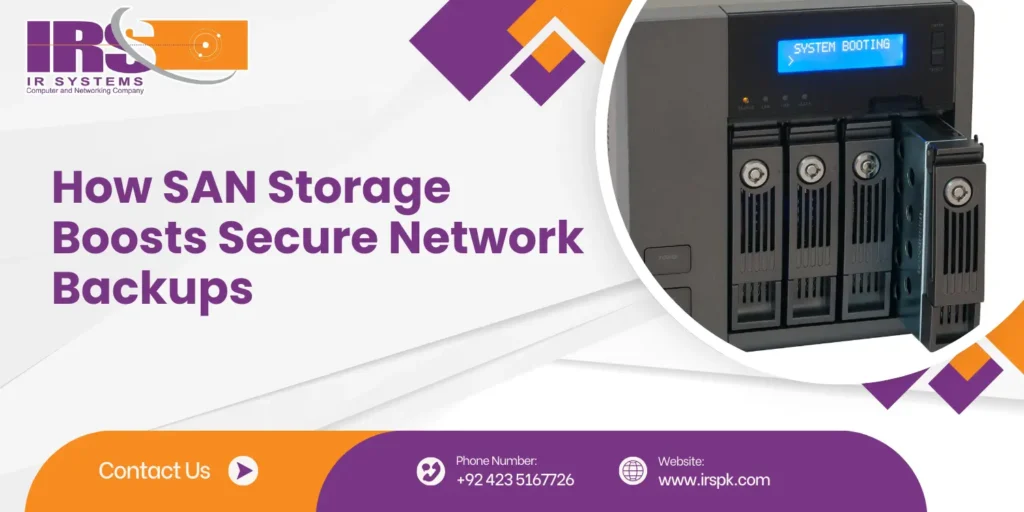
How SAN Storage Boosts Secure Network Backups
In a world where data fuels every decision and operation, businesses can’t afford to take chances with their backup solutions. Whether you’re running a startup or managing enterprise-level infrastructure, the need for reliable, fast, and secure data backups is undeniable. That’s where SAN Storage steps in as a game-changer. In this blog, we’ll explore how SAN storage not only simplifies backup processes but also enhances network security, performance, and scalability. We’ll also look into how SAN integrates with other storage solutions like Asustor NAS storage systems and supports efficient server cloud backup. Understanding the Basics: What is SAN Storage? SAN stands for Storage Area Network. It is a dedicated high-speed network that connects multiple storage devices to servers, making data available at the block level. Unlike direct-attached storage or basic network-attached storage, SAN storage offers enhanced performance, centralized management, and robust security features. As a key provider in this space, IR Systems specializes in offering tailored SAN storage solutions that empower businesses with dependable and scalable backup options. The Real Value: Why SAN Storage Matters for Backups SAN storage ensures faster, safer, and more reliable backups. It keeps your data centralized, reduces downtime, and gives you full control – making it a smart choice for any secure backup strategy: 1. Enhanced Backup Speeds One of the main challenges in traditional backup systems is the time they take. With SAN storage, data moves through high-speed fiber channels or Ethernet, drastically reducing backup windows. Your business operations won’t have to slow down just because backups are running. 2. Centralized Data Management Managing data across multiple servers can be overwhelming. QSAN centralizes all your storage, allowing you to control backup processes from a single point. This not only saves time but also reduces human errors. 3. Reliable Data Availability With SAN’s redundancy features and high availability, you’re not just backing up your data – you’re ensuring it’s always accessible, even in the face of hardware failures or cyber incidents. Fortifying Backup Security with SAN SAN storage strengthens backup protection by isolating data and preventing unauthorized access, ensuring your critical files stay safe: 1. Isolated Backup Environment SAN storage operates on a separate network, keeping it isolated from the main traffic. This isolation acts as a shield, making it more difficult for cyber attackers to infiltrate backup systems. 2. Advanced Access Controls Many SAN storage area network devices come equipped with role-based access and encryption options. This ensures only authorized users can access or modify backup data, making your backups not just secure but also compliant with data regulations. 3. Faster Disaster Recovery In the event of a disaster, time is critical. SAN storage allows for quick data recovery, helping businesses bounce back faster with minimal losses. Integration with server cloud backup further adds resilience to your disaster recovery strategy. Seamless Integration with Server Cloud Backup Businesses today are increasingly opting for hybrid storage solutions – a mix of on-premise and cloud. SAN storage can work hand-in-hand with server cloud backup, offering both local speed and remote redundancy. Data can be first written to the SAN system for fast access and then mirrored to the cloud for offsite protection. IR Systems offers integration – ready SAN setups that support such dual backup environments effortlessly. How SAN and Asustor NAS Storage Systems Work Together While SAN excels in block-level storage and performance, Asustor NAS storage systems are known for their file-sharing and user-friendly interfaces. Combining the two offers flexibility. Use SAN for performance-critical operations and backups, and NAS for everyday file access and collaboration. This balanced approach ensures data is not only safe but also readily available for your teams. At IR Systems, we help configure systems that blend SAN storage with Asustor NAS devices, creating a powerful and cost-effective storage ecosystem. Designed to Grow: SAN’s Scalability Advantage Every business grows, and so does its data. SAN storage is inherently scalable. You can start with a few terabytes and expand to petabytes without reconfiguring your existing setup. This makes SAN an ideal long-term solution for businesses that are growing or expect to scale their operations. With IR Systems, you get the guidance and hardware support needed to scale your storage efficiently. Why Businesses Trust IR Systems for SAN Storage At IR Systems, we understand that secure data backups are more than just a technical requirement – they’re the backbone of business continuity. Our team specializes in deploying tailored SAN storage solutions that align with your specific needs, whether you’re focused on data protection, disaster recovery, or performance optimization. We not only provide high-performance storage area network devices but also ensure seamless integration with cloud services and NAS systems, offering a complete, secure storage strategy. Final Thoughts: SAN Storage is the Foundation of Secure Backups In an age where data loss can mean financial and reputational damage, having the right storage solution is crucial. SAN storage offers unmatched speed, security, and scalability, making it the preferred choice for modern network backups. By combining SAN with server cloud backup and Asustor NAS storage systems, businesses can build a robust, flexible, and secure data environment. Secure Your Data Today with IR Systems If you’re ready to take your backup strategy to the next level, IR Systems is here to help. Our SAN storage solutions are designed for performance, built for security, and customized for you.Visit IR Systems to get started or contact us today for a free consultation. Let’s build a safer, smarter storage future together.
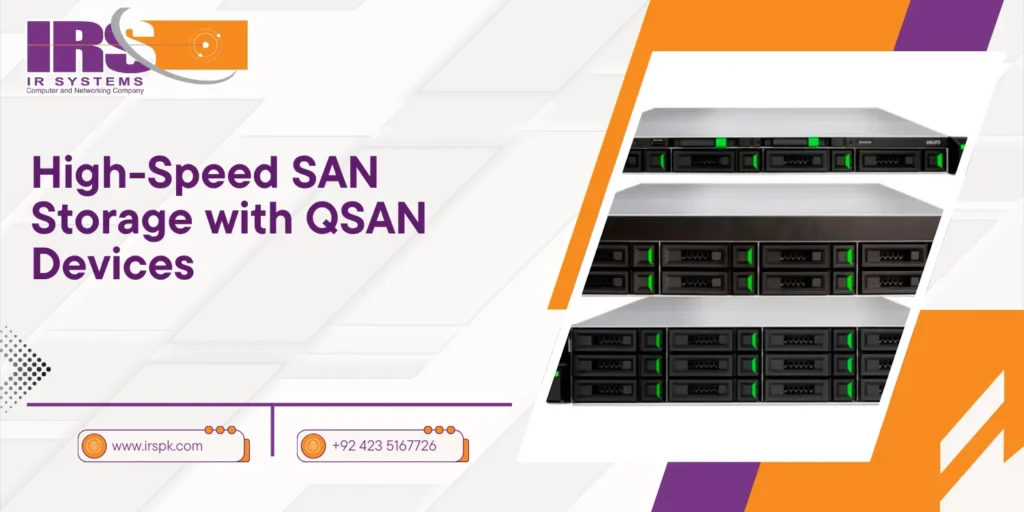
High-Speed SAN Storage with QSAN Devices
In an era where data is growing exponentially, modern businesses demand efficient, secure, and high-speed storage systems that can keep up with their digital transformation. Enter SAN storage – a technology designed for enterprises that need scalable and performance-driven data solutions. Among the top-tier SAN systems available today, QSAN storage devices have emerged as a preferred choice for businesses seeking high-speed access, advanced performance, and robust backup capabilities. This blog will explore how SAN storage works, the advantages of QSAN devices like the QSAN XS 5312, QSAN XS 3312, and QSAN XS 3316, and why they are the ideal storage solution for high-performance computing, virtual environments, and backup data storage. We’ll also discuss how integrating SAN with cloud backup storage can ensure maximum security and flexibility. Why SAN Storage Is a Game-Changer for Businesses SAN storage is designed to support enterprise environments that require low-latency, high-speed access to data. Unlike NAS (Network Attached Storage) or direct-attached storage, SAN operates at the block level, allowing multiple servers to access shared storage as if it were local. Key advantages include: Centralized storage management Ultra-fast data transfer rates Greater scalability High availability and redundancy Businesses that rely on real-time applications, virtualized workloads, or large-scale analytics benefit immensely from the performance boost SAN provides. The Power of QSAN Storage Devices When performance meets innovation, you get QSAN. QSAN storage is designed for environments that require fast, consistent, and scalable data access. With multiple product lines, QSAN caters to businesses of all sizes. Here’s a closer look at their leading devices: 1. QSAN XS 5312 The XS 5312 is a powerful, dual-controller SAN system offering superior performance. Key features include: 12-bay 2U chassis supporting SSD/HDD combinations Dual-active controller for high availability Up to 25GbE and 32Gb FC support for faster networking Snapshot and cloning for backup data storage This model is perfect for enterprises managing heavy databases, virtualization platforms, or high-transaction environments. 2. QSAN XS 3312 The XS 3312 is a mid-range SAN device with versatile features suitable for medium-sized businesses: 12-bay 2U design with modular expansion Intel Xeon processors for accelerated performance Inline compression and deduplication Built-in support for cloud backup storage For growing businesses, the XS 3312 strikes a balance between affordability and high-performance SAN storage. 3. QSAN XS 3316 The XS 3316 takes things further with more capacity and enhanced data security: 16-bay configuration for larger-scale deployments Advanced RAID support (0, 1, 5, 6, 10, 50, 60) Real-time replication and remote backup options Seamless integration with disaster recovery systems This model is best suited for large enterprises, data centers, and managed service providers. Key Benefits of Using QSAN SAN Storage Ultra-Fast Performance QSAN devices leverage powerful processors, NVMe caching, and advanced networking (25/32GbE), delivering lightning-fast IOPS and throughput. Enterprise-Grade Redundancy Dual controllers, hot-swappable drives, and power supplies ensure that operations continue without disruption—a must for enterprise environments. Efficient Backup Data Storage All QSAN systems include snapshot, clone, and backup features that enable scheduled or on-demand backup data storage and fast data recovery. Scalability Without Downtime Add additional enclosures or drives to QSAN SANs without shutting down operations. Seamless scaling keeps business running 24/7. Integrated Cloud Backup Storage QSAN SAN solutions support hybrid deployments with cloud backup storage, giving businesses the flexibility to protect data offsite while maintaining local performance. SAN Storage Use Cases Across Industries Virtualization & Hyper-Converged Infrastructure (HCI) QSAN SANs provide the speed and bandwidth needed for VMs, virtual desktops, and container workloads. Video Editing and Media Production Creative professionals benefit from high throughput and low latency for 4K/8K media rendering and editing workflows. Healthcare & Finance These sectors require instant access to mission-critical data and compliance with data protection laws. QSAN’s secure SAN storage helps meet those needs. Disaster Recovery Planning QSAN integrates easily with cloud backup storage, replication tools, and DR platforms to protect against data loss. How to Choose the Right QSAN Storage Device When selecting the best SAN storage system for your business, consider: Workload Requirements: Are you dealing with high-performance databases, virtual machines, or large file workloads? Scalability Needs: Choose a system that can grow with your data. Backup Strategy: Ensure the device supports local and cloud backup storage solutions. Budget: QSAN offers a range of devices from entry-level to enterprise-class. For example: QSAN XS 5312 – Best for high-speed enterprise workloads. QSAN XS 3312 – Ideal for mid-sized businesses needing flexibility. QSAN XS 3316 – Tailored for larger organizations with expansive backup needs. QSAN + SAN Storage = Future-Proof IT Infrastructure Combining the advantages of SAN architecture with QSAN’s advanced technology ensures your business remains agile, secure, and competitive. Whether you’re a growing SME or a global enterprise, QSAN’s reliable storage devices offer the performance, redundancy, and versatility to meet today’s challenges and tomorrow’s growth. With features like multi-site replication, real-time snapshots, high-availability architecture, and hybrid cloud backup storage options, QSAN makes SAN storage accessible and effective for any business. Conclusion: Power Your Enterprise with QSAN SAN Storage As data volumes continue to surge, investing in high-speed SAN storage is no longer a luxury—it’s a necessity. QSAN’s XS 5312, XS 3312, and XS 3316 models offer powerful, scalable, and cost-effective solutions that redefine how businesses manage and back up their data. Whether you’re planning a digital transformation, implementing disaster recovery, or just looking to upgrade your existing infrastructure, QSAN delivers performance without compromise. Ready to elevate your storage strategy? Contact us today to explore how QSAN devices like the XS 5312, XS 3312, and XS 3316 can transform the way you manage, protect, and scale your data.
Future-Proof Your Business with SAN Storage Solutions

As businesses grow, so does the demand for efficient data storage solutions. Traditional storage methods can no longer meet the increasing need for high performance, scalability, and security. That’s where SAN storage comes in, providing an advanced solution for enterprises to manage large volumes of data while ensuring business continuity with reliable backup solutions. In this article, we’ll explore what this storage is for, how it works, and why it’s a game-changer for businesses. What is SAN Storage? An Overview Storage Area Network (SAN) is a specialized high-speed network that connects storage devices to servers. Unlike direct-attached storage (DAS) or network-attached storage (NAS), SAN storage operates at the block level, offering faster and more efficient access to data. In a SAN setup, multiple storage devices are connected to a central network, allowing servers to access storage as if it were local. This setup enhances data transfer speed and improves overall system performance. Key features of storage include: High Performance: Offers low latency and high-speed data transfer. Scalability: Easily accommodates growing storage needs. Reliability: Provides redundancy and failover mechanisms for data protection. How SAN Storage Works SAN storage works by separating storage resources from the server, creating a dedicated network for data transfer. This network connects servers to storage devices through a fabric layer, typically using Fibre Channel or iSCSI protocols. The fabric layer ensures efficient communication between servers and storage arrays, making data retrieval faster and more reliable. Here’s a breakdown of the process: Storage Devices: These can be hard drives, SSDs, or other storage media. Fabric Layer: The network infrastructure connecting servers and storage devices. Servers: The machines that access and manage data stored on the SAN. By isolating storage traffic from regular network traffic, this storage significantly reduces latency and enhances data access speeds. Why Choose SAN Storage Over Other Solutions? Choosing the right storage solution is crucial for any business aiming to optimize data management. Here’s how SAN storage compares to other options: Feature Direct-Attached Storage (DAS) Network-Attached Storage (NAS) SAN Storage Performance Limited Moderate High Scalability Limited Moderate High Data Protection Basic Advanced Enterprise-grade Backup Solutions Manual Automated Seamless Integration SAN storage stands out due to its high performance, scalability, and built-in data protection features, making it ideal for businesses handling large amounts of critical data. SAN Storage as a Reliable Backup Solution Data loss can be catastrophic for businesses. That’s why having a robust backup solution is essential. It offers advanced backup capabilities, ensuring that your business data remains safe and accessible at all times. Here are some key backup features provided by SAN storage: Snapshot Backups: SAN systems can take frequent snapshots of data, creating point-in-time copies that allow quick recovery in case of data corruption. Data Replication: This storage supports data replication across different locations, ensuring that your data is always backed up in a secure environment. Automated Backups: Automate backup processes to reduce human error and ensure consistent data protection. With these features, businesses can minimize downtime and prevent data loss, ensuring continuous operations. The Role of QASAN Storage in Modern Data Management When discussing SAN storage, it’s essential to mention QSAN storage, a unique variation of SAN technology designed to offer even more robust performance and reliability. QSAN storage integrates advanced features such as: High Availability: Ensures minimal downtime with failover mechanisms. Data Deduplication: Reduces storage needs by eliminating duplicate data. Advanced Security: Protects data against unauthorized access and cyber threats. These features make QSAN storage an ideal choice for organizations looking to optimize their data management strategies. Benefits of Implementing SAN Storage Adopting storage offers numerous advantages for businesses, especially those that rely on large-scale data processing. Here are some key benefits: 1. Enhanced Performance By creating a dedicated network for storage traffic, it minimizes latency and boosts data transfer speeds. This is particularly beneficial for applications that require high I/O performance. 2. Scalability As businesses grow, their data storage needs evolve. This storage allows organizations to add more storage capacity without disrupting existing systems, ensuring seamless scalability. 3. Data Protection With built-in backup solutions, SAN storage ensures that data is always protected. Features like snapshots and data replication provide businesses with peace of mind, knowing that their data is safe. 4. Business Continuity In the event of hardware failure or cyber-attacks, SAN storage ensures quick data recovery, minimizing downtime and maintaining business operations. Choosing the Right SAN Storage Solution When selecting this storage system, businesses should consider their specific needs and future growth plans. Here are some factors to keep in mind: Storage Capacity: Ensure that the solution can handle current and future data volumes. Performance Requirements: Choose a system that meets your performance needs for critical applications. Backup and Recovery Features: Look for advanced backup solutions like automated backups, snapshots, and data replication. Security Measures: Ensure that the system offers robust security features to protect against data breaches. Common Use Cases for SAN Storage This storage is widely used across various industries due to its high performance and reliability. Here are some common use cases: Enterprise Applications: It supports mission-critical applications that require high-speed data access. Virtualization: It enhances performance in virtualized environments by providing fast and reliable storage. Data Backup: Businesses rely on this storage as a primary backup solution to protect their data. Disaster Recovery: With features like data replication, it ensures quick recovery in disaster scenarios. FAQs About SAN Storage What is the difference between SAN storage and NAS storage? It operates at the block level, providing faster and more efficient data access. NAS storage, on the other hand, operates at the file level and is more suitable for file sharing. Can SAN storage be used as a backup solution? Yes, it offers advanced backup features such as snapshots, data replication, and automated backups, making it a reliable backup solution for businesses. What is QSAN storage? QSAN storage is a variation of SAN technology that offers enhanced performance, high availability, and advanced security features. How scalable is SAN storage? This storage is highly scalable,