Why NAS Storage is the Best Choice for Businesses
In today’s data-driven world, effective storage solutions are crucial for both businesses and individuals. Whether it’s a small office looking to centralize files or an enterprise managing large datasets, NAS storage (Network Attached Storage) provides a reliable and efficient solution. Unlike traditional storage methods, NAS offers scalability, security, and seamless remote access, making it a preferred choice for modern computing environments. This article explores the fundamentals of NAS devices, their benefits, how they compare to cloud storage servers, and how to choose the right NAS system for your needs. What is NAS Storage? NAS storage is a dedicated file storage system connected to a network, allowing multiple users and devices to access and share files from a centralized location. Unlike direct-attached storage (DAS), which connects storage devices directly to a computer, NAS provides network-based access, enhancing collaboration and data management. Key Features of NAS Storage: Centralized Storage: All data is stored in a single, accessible location. Remote Access: Users can access files from anywhere using a web interface or mobile app. Scalability: Easily add more storage as needed. Automated Backups: Ensures data protection and disaster recovery. Security & Encryption: Protects sensitive files from unauthorized access. Why Choose NAS Storage Over Traditional Methods? NAS storage offers several advantages over external hard drives, USB flash drives, and even some cloud storage servers. Here’s why NAS is becoming an essential storage solution: Higher Efficiency & Performance NAS systems operate independently, meaning they don’t consume computer resources like USB drives do. Cost-Effective Storage Expansion Instead of upgrading multiple hard drives, you can simply expand NAS storage. Enhanced Data Protection Many NAS storage devices come with RAID (Redundant Array of Independent Disks) support, offering redundancy and fault tolerance. Seamless Collaboration Teams can share and access files in real time, improving workflow efficiency. Better Control Over Data Unlike public cloud storage, NAS allows you to have full control over your data without third-party intervention. Understanding NAS Devices When choosing a NAS device, understanding the different types and features is crucial. Here are some factors to consider: 1. Types of NAS Storage Devices Personal/Home NAS: Ideal for individuals needing extra storage and media streaming. Small Business NAS: Supports multiple users with enhanced security and backup options. Enterprise NAS: Designed for large-scale operations with high-speed data transfer and extensive redundancy features. 2. Storage Capacity & Expandability NAS devices typically support multiple hard drives, allowing expansion as storage needs grow. Some high-end models allow up to 16 bays for enterprise use. 3. Performance & Connectivity Gigabit Ethernet & 10GbE support for fast data transfer. SSD Caching for quicker access to frequently used files. Multiple drive bays for redundancy and enhanced performance. 4. Security & Backup Features Built-in firewalls & encryption ensure data security. Automated backups protect against data loss. User authentication & access control allow role-based permissions. NAS vs. Cloud Storage Servers While NAS network-attached storage and cloud storage both offer remote file access, they serve different purposes. Let’s compare them: Feature NAS Storage Cloud Storage Servers Data Control Full ownership Third-party managed Accessibility Local and remote Anywhere with internet Security High (customizable) Dependent on provider Cost One-time hardware cost Recurring subscription fees Performance Faster, localized Slower due to internet dependency When to Choose NAS: When you require faster access speeds without internet dependency. When data security and privacy are a priority. If you prefer a one-time investment rather than ongoing subscription costs. When to Choose Cloud Storage: When you need global access to files without physical hardware. If automatic software updates and maintenance are preferable. When working with external teams who require seamless cloud collaboration. Setting Up a NAS System Setting up a NAS device is straightforward and typically follows these steps: Choose Your NAS Device Select a NAS system based on storage capacity, performance, and budget. Install Hard Drives Insert compatible HDDs or SSDs into the NAS bays. Connect to the Network Use an Ethernet cable to connect the NAS to your router or switch. Access the NAS Interface Use a web browser or mobile app to configure the settings. Create User Accounts & Permissions Set up multiple users and assign access levels based on roles. Enable Data Protection Features Configure RAID, backup settings, and encryption for enhanced security. Best NAS Storage Devices in 2024 Here are some top NAS storage devices to consider for various needs: Synology DS920+ – Ideal for home users and small businesses. QNAP TS-464 – Offers high-speed performance with 10GbE connectivity. Western Digital My Cloud EX2 Ultra – Affordable personal cloud storage. Buffalo TeraStation 3410DN – Great for enterprise-level security and backups. Asustor AS5304T – A solid choice for media enthusiasts and content creators. Future of NAS Storage & Emerging Trends With increasing data needs, NAS storage continues to evolve. Some emerging trends include: Integration with AI & Machine Learning: AI-driven analytics for predictive maintenance and storage optimization. Hybrid Cloud Integration: NAS systems that seamlessly sync with cloud storage servers. NVMe SSD Support: Boosts read/write speeds for demanding applications. 5G & Edge Computing Compatibility: Faster remote access and reduced latency. Final Thoughts: NAS storage is a versatile and cost-effective solution for both personal and business data management. With benefits such as data control, security, scalability, and seamless access, it stands out from traditional storage methods and cloud storage servers. Whether you’re a small business, creative professional, or enterprise user, investing in the right NAS network-attached storage system will improve efficiency and safeguard your critical data. If you’re looking for reliable NAS storage devices, ensure they align with your current and future needs. Explore models with robust security, fast performance, and expandability to get the best value for your investment. Contact us today for expert guidance on choosing the perfect NAS solution for your business or personal use.
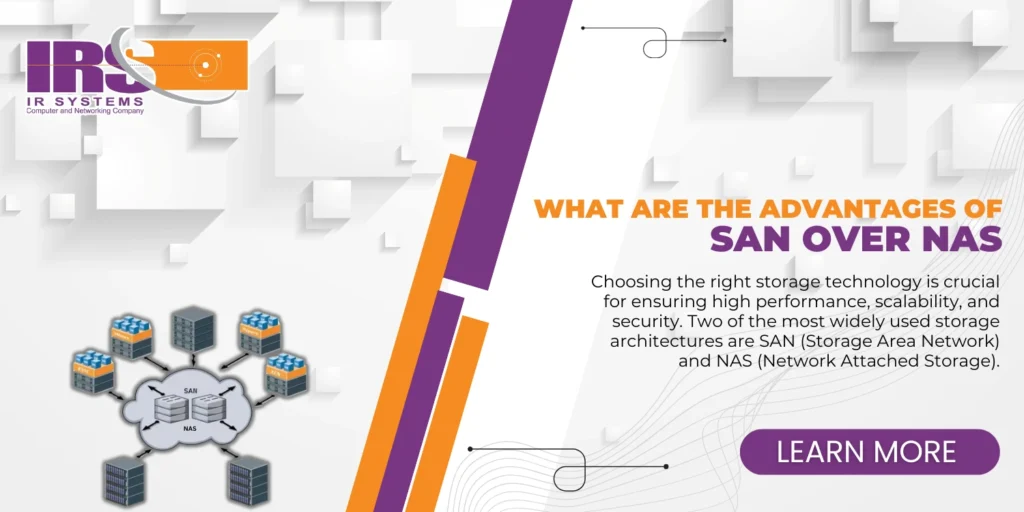
What Are the Advantages of SAN Over NAS?
In today’s digital landscape, businesses generate vast amounts of data that require efficient and secure storage solutions. Choosing the right storage technology is crucial for ensuring high performance, scalability, and security. Two of the most widely used storage architectures are SAN (Storage Area Network) and NAS (Network Attached Storage). While both serve essential roles, SAN storage stands out as the preferred choice for enterprises and data-intensive applications. This article explores the advantages of SAN over NAS, highlighting why businesses, especially those looking for backup solutions in Lahore, should consider SAN for backup data storage and high-speed performance. Understanding SAN and NAS: Key Differences Before discussing the advantages of SAN storage, it is important to understand the fundamental differences between SAN and NAS. What Is SAN (Storage Area Network)? A Storage Area Network (SAN) is a dedicated high-speed network that connects storage devices directly to multiple servers, enabling block-level data access. Unlike traditional storage methods, SAN ensures low latency, high reliability, and superior performance by keeping storage traffic separate from standard network operations. Best For: Large enterprises, cloud computing, virtualization, databases, and applications requiring high-speed performance. Common Uses: Financial transactions, healthcare records, e-commerce platforms, and large-scale backup data storage solutions. What Is NAS (Network Attached Storage)? Network Attached Storage (NAS) is a file-based storage system connected to a shared network, allowing multiple users to access files over Ethernet. NAS functions like a centralized file server, making it ideal for simple file sharing and backups. Best For: Small businesses, home users, and organizations needing shared file access. Common Uses: Office document storage, media streaming, and small-scale backup solutions in Lahore. Why Choose SAN Over NAS? Key Advantages of SAN Storage 1. High-Speed Performance and Low Latency SAN storage provides exceptional performance compared to NAS, thanks to its high-speed architecture and block-level access. How SAN Achieves High Performance: Uses Fibre Channel (FC) or iSCSI for ultra-fast data transfers. Bypasses traditional network congestion, ensuring seamless operations. Delivers direct storage access to applications, reducing delays. Why This Matters: Businesses handling big data analytics, real-time transactions, and database management need high-speed access to critical information. SAN storage ensures minimal downtime and maximum efficiency. For example, financial institutions processing thousands of transactions per second cannot afford slow storage speeds. SAN ensures rapid data access, preventing transaction delays. 2. Seamless Scalability Without Performance Bottlenecks As businesses grow, their storage needs increase. SAN storage offers seamless expansion without affecting speed or efficiency. NAS Scalability Limitation: Adding more users or storage can slow down NAS performance due to increased network traffic. SAN Advantage: Easily expandable by integrating additional storage units. Supports thousands of users and massive data volumes without slowdowns. Best suited for organizations requiring continuous data access and storage expansion. 3. Superior Backup and Disaster Recovery Solutions Data loss can be devastating for businesses. SAN storage provides highly efficient backup and disaster recovery solutions to ensure business continuity. Advanced Backup Data Storage Features: Block-level backup enables faster and more efficient data recovery than NAS file-based backups. Snapshot technology allows quick restoration of previous data states. SAN supports real-time replication, ensuring up-to-date backup copies. Disaster Recovery Benefits: Geographically distributed replication ensures data availability in case of system failure. Ideal for backup solutions in Lahore, offering businesses a secure way to store and restore critical information. A large IT firm in Lahore, for example, can prevent data loss by using SAN for continuous replication and high-speed recovery, ensuring minimal downtime during unexpected failures. 4. Dedicated Storage Network for Maximum Efficiency Unlike NAS, which relies on a shared network, SAN operates on a separate high-speed network, ensuring better performance and reliability. Advantages of a Dedicated Storage Network: Eliminates network congestion and prevents slow data access. Provides uninterrupted storage access, even during peak usage hours. Reduces dependence on traditional Ethernet networks, enhancing efficiency. For example, an e-commerce company experiencing high traffic during a sale will benefit from SAN storage because it prevents slowdowns and ensures a seamless customer experience. 5. Enhanced Security and Data Protection Data security is a top priority for businesses handling sensitive information. SAN storage offers advanced security features that reduce the risk of unauthorized access or data breaches. Key Security Benefits of SAN Storage: Encryption capabilities protect data from cyber threats. Role-based access control (RBAC) restricts data access to authorized users only. Built-in redundancy ensures data integrity in case of hardware failures. Industries such as banking, government, and healthcare benefit from SAN security features, ensuring that sensitive data remains protected against cyberattacks and unauthorized access. 6. High Availability and Reliability Downtime can result in significant financial losses for businesses. SAN storage is designed to minimize downtime and ensure maximum reliability. Built-in Redundancy Features: Multiple storage controllers to prevent single points of failure. Automated failover mechanisms to ensure continuous operations. RAID configurations to protect against data loss due to drive failures. Many SAN solutions guarantee 99.999% uptime, making them ideal for mission-critical applications that require constant data access. 7. Optimized for Virtualization and Cloud Environments With the rise of virtualization and cloud computing, businesses need efficient storage solutions that can support multiple virtual machines. Why SAN is Best for Virtualization: Provides high-speed data access for virtual servers. Supports live migration of virtual machines without data transfer delays. Improves overall efficiency in cloud and hybrid environments. For organizations running VMware, Hyper-V, or Kubernetes, SAN storage ensures a smooth and scalable virtualization infrastructure. When Should You Choose SAN Over NAS? SAN storage is the best choice if your business requires: High-speed performance for databases, analytics, and enterprise applications. Scalable storage solutions without impacting speed. Secure backup solutions in Lahore for business continuity. Reliable backup data storage with advanced security features. High availability for mission-critical applications. Seamless virtualization support for cloud-based environments. If your organization deals with large-scale data storage, virtualization, or enterprise workloads, SAN storage is the ideal solution. Final Thoughts While NAS is useful for small businesses and basic file-sharing needs, SAN storage provides unmatched performance, security, scalability, and reliability, making it the preferred choice for enterprises. For businesses in
What is the Main Difference Between NAS and SAN storage?
In today’s data-driven world, businesses rely heavily on efficient storage solutions to manage their ever-growing data needs. Two of the most popular storage systems are NAS (Network Attached Storage) and SAN (Storage Area Network). While both serve the purpose of data storage, they differ significantly in their architecture, functionality, and use cases. Understanding the main difference between NAS and SAN storage is crucial for businesses to make informed decisions about their storage infrastructure. In this blog, we’ll explore the key distinctions, benefits, and applications of both systems, and why choosing the right solution is essential for enterprise data security and continuous business growth. Introduction to NAS and SAN NAS and SAN are both storage solutions designed to help businesses manage and store data efficiently. However, they operate in fundamentally different ways. NAS is a file-level storage system that connects to a network, allowing multiple users and devices to access data simultaneously. It’s ideal for small to medium-sized businesses that need a simple, cost-effective solution for file sharing and backup. On the other hand, SAN is a block-level storage system that provides high-speed, dedicated access to data. It’s typically used by large enterprises that require high performance, scalability, and reliability for mission-critical applications. In this article, we’ll dive deeper into the differences between NAS and SAN storage, their advantages, and how they can benefit your business. We’ll also discuss the importance of enterprise data security and how choosing the right storage solution can contribute to continuous business growth. Whether you’re looking for backup solutions in Lahore or a robust storage system for your enterprise, this guide will help you make an informed decision. Understanding NAS: Network Attached Storage NAS (Network Attached Storage), is a storage device that connects to a network, allowing multiple users and devices to access and share files. It operates at the file level, meaning it manages data as files and folders, making it easy to use and manage. NAS devices are often used for file sharing, data backup, and media streaming. Key Features of NAS Ease of Use: NAS systems are user-friendly and require minimal setup. They are ideal for businesses that need a simple storage solution. Cost-Effective: NAS is generally more affordable than SAN, making it a popular choice for small to medium-sized businesses. Scalability: While NAS systems are scalable, they are typically limited to a certain number of drives and storage capacity. File-Level Storage: NAS manages data as files, making it easy to organize and access data. Use Cases for NAS File Sharing: NAS allows multiple users to access and share files simultaneously, making it ideal for collaborative environments. Data Backup: NAS systems are commonly used for backup solutions in Lahore and other regions, providing a reliable way to store and protect data. Media Streaming: NAS devices can stream media files to multiple devices, making them popular for home entertainment systems. Understanding SAN: Storage Area Network SAN (Storage Area Network), is a high-performance storage system that provides block-level access to data. Unlike NAS, which operates at the file level, SAN manages data as blocks, offering faster and more efficient data access. SAN storage systems are typically used by large enterprises that require high-speed, reliable storage for mission-critical applications. Key Features of SAN High Performance: SAN systems offer high-speed data access, making them ideal for applications that require low latency and high throughput. Scalability: SAN is highly scalable, allowing businesses to add storage capacity as needed without disrupting operations. Block-Level Storage: SAN manages data as blocks, providing faster and more efficient data access compared to file-level storage. Dedicated Network: SAN operates on a dedicated network, ensuring high performance and reliability. Use Cases for SAN Databases: SAN is commonly used for database storage, where high-speed data access is critical. Virtualization: SAN systems are ideal for virtualized environments, providing the performance and scalability needed for virtual machines. Enterprise Applications: Large enterprises use SAN for mission-critical applications that require high performance and reliability. Key Differences Between NAS and SAN Network-attached storage (NAS) and Storage Area Networks (SAN) are two popular storage solutions, each catering to different business needs. NAS provides easy-to-manage, file-based storage, making it ideal for small to medium-sized businesses. SAN, on the other hand, offers high-performance, block-level storage, commonly used in enterprise environments. Understanding their differences can help businesses choose the right storage solution based on performance, scalability, and cost considerations. Data Access Level NAS operates at the file level, managing data as files and folders. SAN operates at the block level, offering faster access to data. Performance NAS is suitable for general-purpose storage and file sharing but may have performance limitations. SAN delivers high-speed data access, making it ideal for mission-critical applications. Scalability NAS is scalable but may have storage and performance constraints. SAN is highly scalable, allowing businesses to expand capacity as needed. Cost NAS is more cost-effective and suitable for small to medium-sized businesses. SAN is more expensive but offers superior performance and reliability. Use Cases NAS is best for file sharing, data backup, and media streaming. SAN is ideal for databases, virtualization, and enterprise applications. Asustor NAS Storage: A Reliable Solution for Your Data Needs Asustor NAS storage systems are known for their user-friendly design, robust performance, and advanced features, making them an excellent choice for businesses and individuals alike. These devices offer seamless file sharing, data backup, and media streaming capabilities, catering to both small and medium-sized enterprises. With intuitive software and a wide range of applications, Asustor NAS ensures easy management and accessibility of your data. Why Choose Asustor NAS? Asustor NAS storage systems or stands out for its affordability, scalability, and versatility. It supports multiple RAID configurations, ensuring data redundancy and protection. Additionally, Asustor devices come with features like 4K media streaming, remote access, and integration with cloud services, making them ideal for both personal and professional use. Whether you need backup solutions in Lahore or a centralized storage system, Asustor NAS delivers reliability and performance at an affordable price. The Essential Guide to Enterprise Data Security and Continuous
QNAP NAS Storage: Top Backup & Network Solution
In today’s fast-paced digital world, businesses are generating and managing vast amounts of data daily. Ensuring this data is stored securely and accessible at all times is critical for operational efficiency and business continuity. This is where QNAP NAS Storage comes into play. As a leading network-attached storage solution, QNAP NAS provides businesses with a reliable, scalable, and secure way to manage their data. At IR Systems, we specialize in delivering cutting-edge storage solutions tailored to meet your business needs. In this blog, we’ll explore how this storage can transform your data management strategy, the importance of enterprise data security, and how our solutions can help your business grow continuously. Why Data Security is Crucial for Business Growth Data is the backbone of modern businesses. From customer information to financial records, losing access to critical data can lead to significant downtime and revenue loss. Enterprise data security ensures that your sensitive information is protected from cyber threats, hardware failures, and accidental deletions. With QNAP NAS Storage, businesses can achieve: Enhanced Data Protection: Advanced encryption and RAID configurations safeguard your data. Seamless Backup Solutions: Automated backups ensure your data is always recoverable. Scalable Storage: Easily expand storage capacity as your business grows. At IR Systems, we understand the challenges businesses face and beyond. That’s why we offer tailored backup solutions to help you stay ahead of potential data disasters. The Role of Network Storage in Modern Businesses Network storage, often referred to as Network-Attached Storage solution, is a centralized storage solution that allows multiple users and devices to access data simultaneously. It’s an essential component of any business’s IT infrastructure, providing: Centralized Data Management: Store and manage all your data in one place. Improved Collaboration: Enable teams to access and share files effortlessly. Cost-Effective Scalability: Add storage capacity without overhauling your entire system. QNAP NAS Storage excels in providing these benefits, making it a top choice for businesses looking to optimize their data management processes. How QNAP NAS Storage Enhances Backup Solutions Backup solutions are a critical aspect of any data management strategy. Without reliable backups, businesses risk losing valuable data due to hardware failures, cyber-attacks, or human error. It offers robust backup features, including: Automated Backups: Schedule regular backups to ensure data is always up-to-date. Hybrid Backup Sync: Combine local and cloud backups for added security. Disaster Recovery: Quickly restore data in case of emergencies. For businesses, our backup solutions are designed to provide peace of mind, knowing your data is secure and recoverable at all times. The Essential Guide to Enterprise Data Security and Continuous Business Growth Enterprise data security is more than just safeguarding information—it’s about creating a foundation for uninterrupted business growth. In today’s data-driven world, ensuring your data is secure, accessible, and compliant is critical for long-term success. Here’s how this Storage solution plays a pivotal role in supporting continuous business growth: 1. Data Accessibility: Empowering Your Team With this Storage, your team can access critical data anytime, anywhere. This seamless accessibility enhances productivity, enabling employees to collaborate effectively and make informed decisions without delays. Whether your team is in the office or working remotely, QNAP ensures your data is always within reach. 2. Compliance: Meeting Industry Standards Staying compliant with industry regulations is non-negotiable. This Storage offers advanced security features like encryption, user authentication, and audit logs, helping you meet stringent compliance requirements. This not only protects your business from legal risks but also builds trust with clients and stakeholders. 3. Cost Efficiency: Scalable and Sustainable Solutions Investing in scalable storage solutions like QNAP NAS allows you to reduce IT costs while accommodating growing data needs. Instead of overhauling your entire system, you can expand storage capacity as your business grows, ensuring cost-effective and sustainable operations. By partnering with IR Systems, you gain access to expert guidance and cutting-edge technology tailored to your business needs. Let us help you build a secure, efficient, and growth-oriented data management strategy. FAQs About QNAP NAS Storage What is QNAP NAS Storage? It is a network-attached storage solution that provides secure, scalable, and efficient data management for businesses. How does QNAP NAS ensure data security? QNAP NAS uses advanced encryption, RAID configurations, and automated backups to protect your data from threats and failures. Can QNAP NAS be customized for your business needs? Yes, QNAP NAS is highly customizable, allowing you to scale storage and features as your business grows. Why choose IR Systems for backup solutions in Lahore? We offer tailored solutions, expert support, and cutting-edge technology to ensure your data is always secure and accessible. Why Choose IR Systems for Your Storage Needs? At IR Systems, we are committed to helping businesses and beyond achieve their data management goals. Our expertise in QNAP NAS Storage and backup solutions ensures that your data is secure, accessible, and optimized for performance. Whether you’re looking to enhance data security, streamline operations, or support continuous business growth, we have the solutions you need. Visit us to learn more about how we can help your business thrive. By investing in QNAP NAS Storage and partnering with IR Systems, you’re not just securing your data—you’re paving the way for sustainable business growth. Contact us today and let us help you build a future-proof data management strategy.
Secure and Scalable NAS Storage Solutions
In today’s digital era, businesses rely heavily on efficient and secure data storage solutions to drive operations and safeguard valuable information. NAS Storage has emerged as a vital tool for companies aiming to streamline operations, ensure data security, and support continuous growth. Whether you’re a small business or a large enterprise, understanding the role and benefits of NAS (Network-Attached Storage) can transform the way you handle data. What is NAS Storage? NAS, or Network-Attached Storage, is a dedicated data storage device connected to a network that allows authorized users to store and retrieve data seamlessly. Unlike traditional storage solutions, NAS offers advanced features like: Centralized Data Management: Consolidates all your data in one place. High Scalability: Easily expandable as your storage needs grow. Enhanced Accessibility: Provides remote access to data anytime, anywhere. For businesses, NAS Storage provides a perfect solution to meet the increasing demands for data efficiency and security. Benefits of NAS Storage for Businesses 1. Seamless Backup Solutions One of the core advantages of NAS Storage is its capability to provide reliable Backup Solutions. It ensures your critical business data is protected against unforeseen circumstances such as hardware failures, cyber-attacks, or natural disasters. With automated backups and easy recovery options, NAS eliminates the risk of data loss. 2. Scalability to Meet Growing Needs As your business grows, so does your data. NAS Storage is designed to scale effortlessly, making it an ideal choice for enterprises of all sizes. You can add more storage capacity without disrupting existing workflows, ensuring uninterrupted operations. 3. Improved Collaboration and Efficiency NAS enables multiple users to access and share files simultaneously, fostering better collaboration within teams. With features like version control and secure file sharing, businesses can boost productivity and streamline operations. 4. Enhanced Data Security With cyber threats becoming increasingly prevalent, securing business data is non-negotiable. NAS Storage incorporates advanced security features like encryption, user access controls, and real-time monitoring to protect sensitive information. These features are invaluable for companies looking to safeguard their assets. How NAS Storage Supports Enterprise Data Security Centralized Data Management By consolidating all files in a centralized system, NAS simplifies data management while reducing the risk of data breaches. Administrators can monitor access, track changes, and ensure compliance with regulatory standards, contributing to robust enterprise data security. Backup and Disaster Recovery NAS devices are equipped with automated backup and disaster recovery features. Businesses can schedule regular backups to ensure data integrity and continuity, even during unexpected events. Integration with Existing Systems NAS Storage seamlessly integrates with existing IT infrastructure, allowing businesses to enhance data security without overhauling the IR SYSTEMS. Its compatibility with various software and hardware platforms ensures smooth operation. Why Choose NAS Storage? Businesses are increasingly turning to NAS solutions for their unmatched versatility and reliability. Here are some reasons why: Cost-Effective Solutions: NAS eliminates the need for multiple storage devices, reducing overall expenses. Flexibility: With remote access capabilities, employees can work from anywhere, enhancing operational flexibility. Customization: Tailored solutions cater to the specific needs of businesses across industries. At IR SYSTEMS, we offer state-of-the-art NAS Storage solutions designed to meet the unique requirements of businesses. Visit our website to learn more about how we can help secure your data and drive growth. NAS Storage vs. Traditional Storage Solutions Feature NAS Storage Traditional Storage Accessibility Remote and centralized Limited to local devices Scalability High Low Cost Cost-effective in the long run High maintenance costs Backup Capabilities Automated and efficient Manual and time-consuming Security Advanced encryption and control Basic protection mechanisms The Essential Guide to Enterprise Data Security and Continuous Business Growth Modern enterprises rely on robust data storage systems to secure sensitive information and support growth strategies. Here’s how NAS Storage aligns with these goals: Streamlined Workflows: With centralized data storage, employees can easily collaborate and share resources. Data Protection: Features like real-time backups and encryption safeguard critical business data. Cost Efficiency: Investing in scalable storage solutions reduces operational costs over time. Enhanced Decision-Making: Instant access to data enables informed business decisions, driving growth and success. FAQs About NAS Storage 1. What businesses benefit most from NAS Storage? NAS Storage is ideal for businesses of all sizes, especially those requiring secure, scalable, and cost-effective data management solutions. 2. How does NAS ensure data security? NAS devices offer features like encryption, user access controls, and real-time monitoring to protect sensitive data from cyber threats. 3. Can NAS Storage handle large-scale operations? Yes, NAS Storage is highly scalable and can accommodate growing data needs, making it suitable for large-scale operations. 4. Is NAS Storage cost-effective? Absolutely. By consolidating storage needs into one system, NAS reduces the need for multiple devices and lowers maintenance costs. 5. Where can you find reliable NAS Storage solutions? For reliable and advanced NAS Storage solutions. Final Thoughts: NAS Storage offers unparalleled advantages for businesses, from secure data management to enhanced collaboration and cost efficiency. By investing in this versatile solution, you can safeguard your business data, improve operational workflows, and support long-term growth. At IR SYSTEMS, we specialize in providing cutting-edge NAS Storage solutions tailored to meet your specific needs. Let us help you unlock the full potential of your business. For more information or assistance, don’t hesitate to Contact Us today and get started!